Launch offer — valid today only

📄 Digital book in PDF · read it on your phone or print it

Extinguisher Servicing Illustrated: BS 5306 in Drawings Know if It's Basic, Extended or Overhaul at a Glance

Fire classes and colour bands, stored pressure and cartridge units, basic service, extended service, CO2 overhaul, discharge tests, siting, fire blankets, labels and records. Every topic has its own page: first the drawing, then what you need to remember. 68 illustrated pages.

START STUDYING THIS WAY

🔒 Secure checkout · PDF by email · 30-day guarantee

Every topic, its own pageEach check drawn, with the explanation beside it
68 illustrated pages8 parts, from what a fire needs to burn to assessment day
Up-to-date sourcesBS 5306-3, BS 5306-8 and BS EN 3
PDF by emailFormat

Look Inside the Book

Every page has one big drawing and a box with the intervals, weights and rules you need to know:

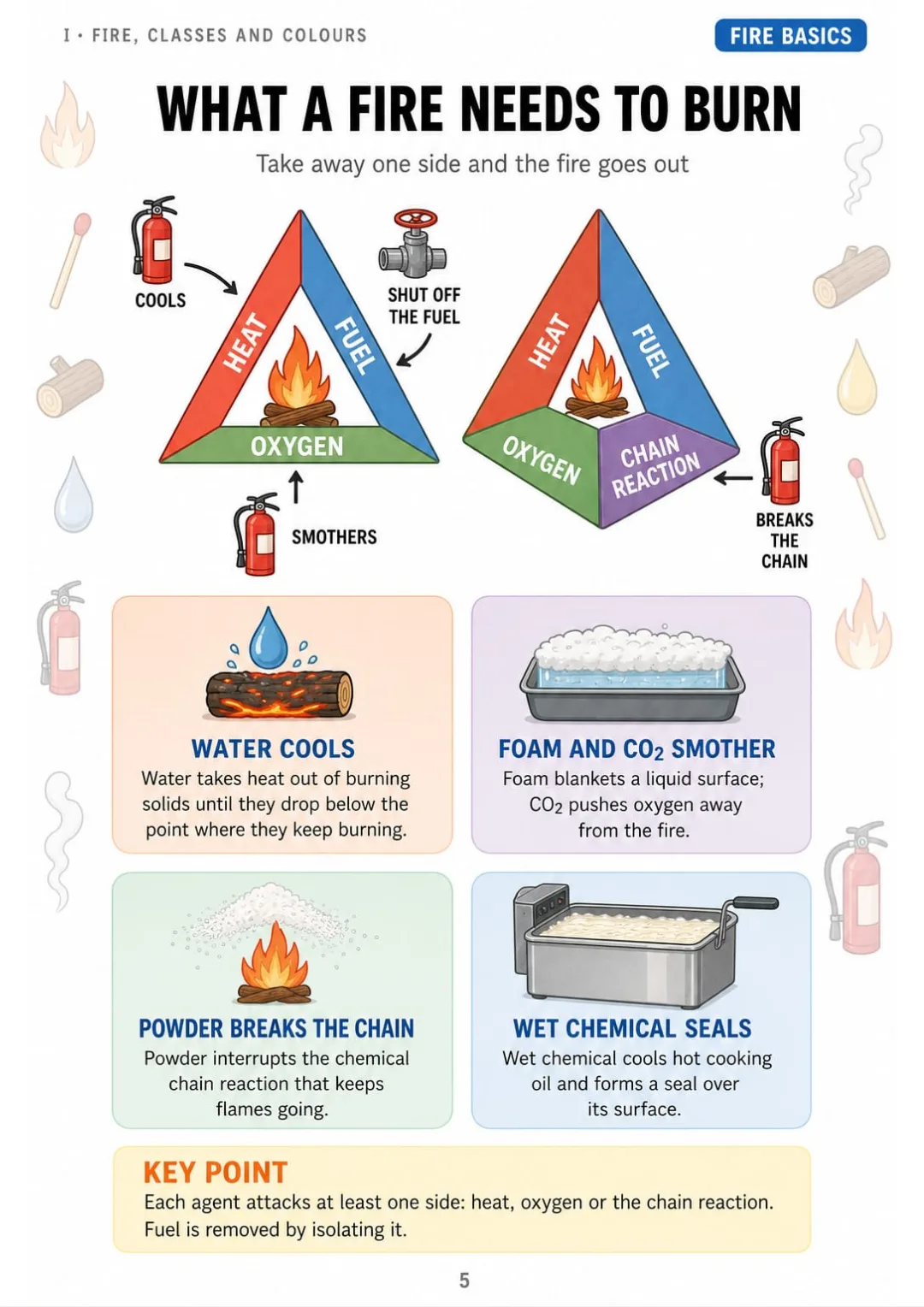
Fire triangle and tetrahedron: water cools, foam and CO2 smother, powder breaks the chain.
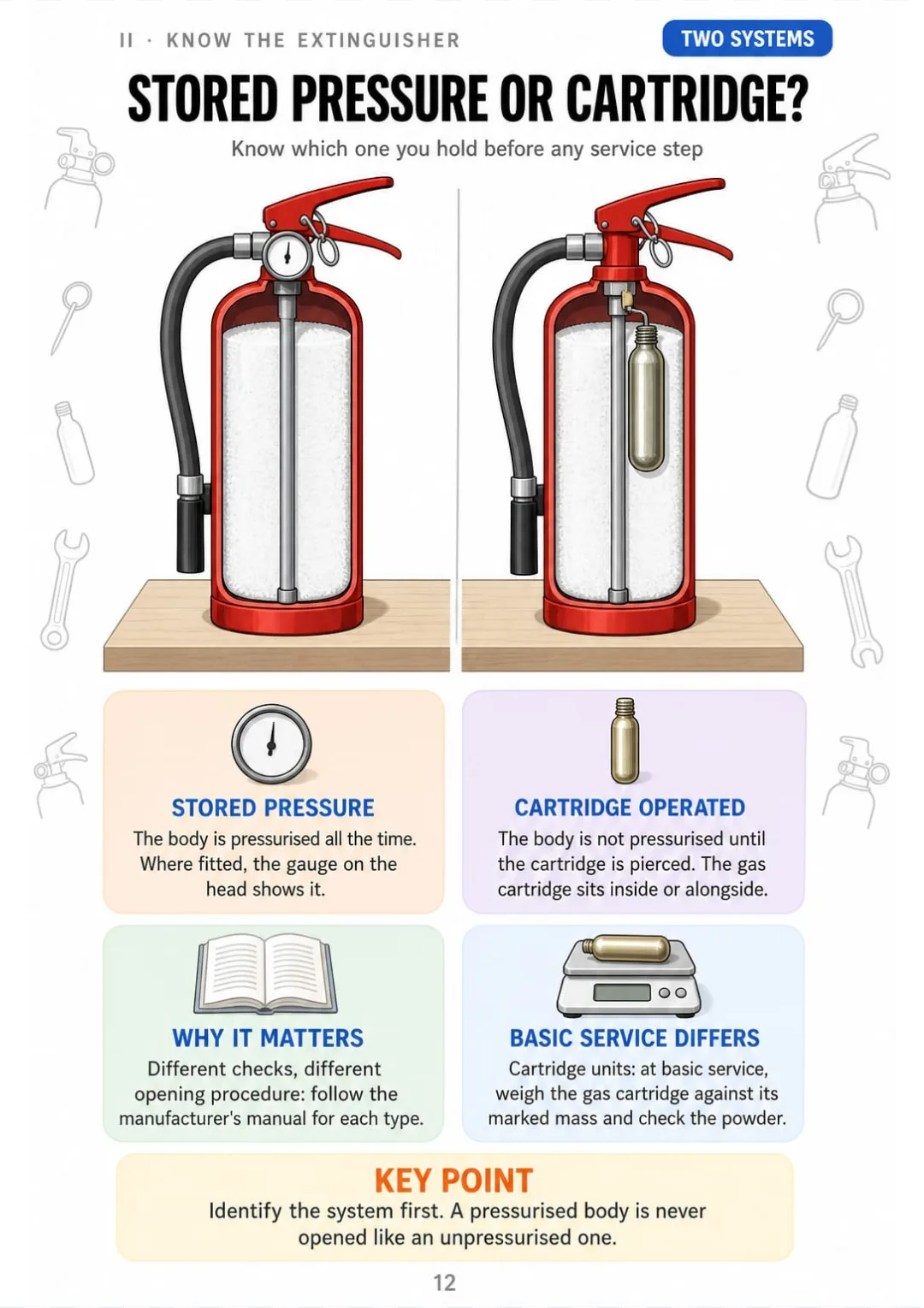
Stored pressure vs cartridge operated: two cutaways, one difference that changes the whole service.
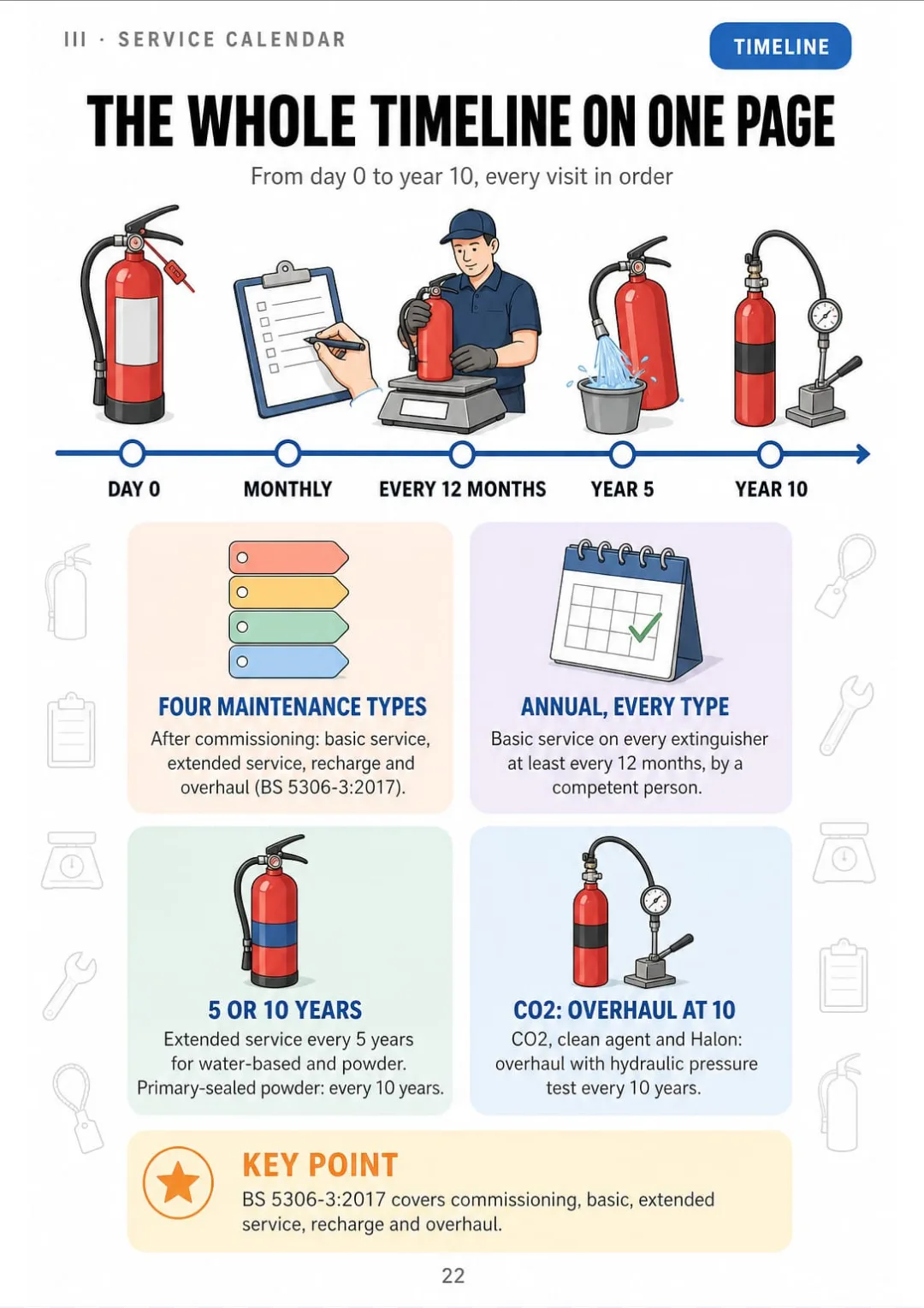
Day 0, monthly, every 12 months, year 5, year 10: the BS 5306-3 calendar on one line
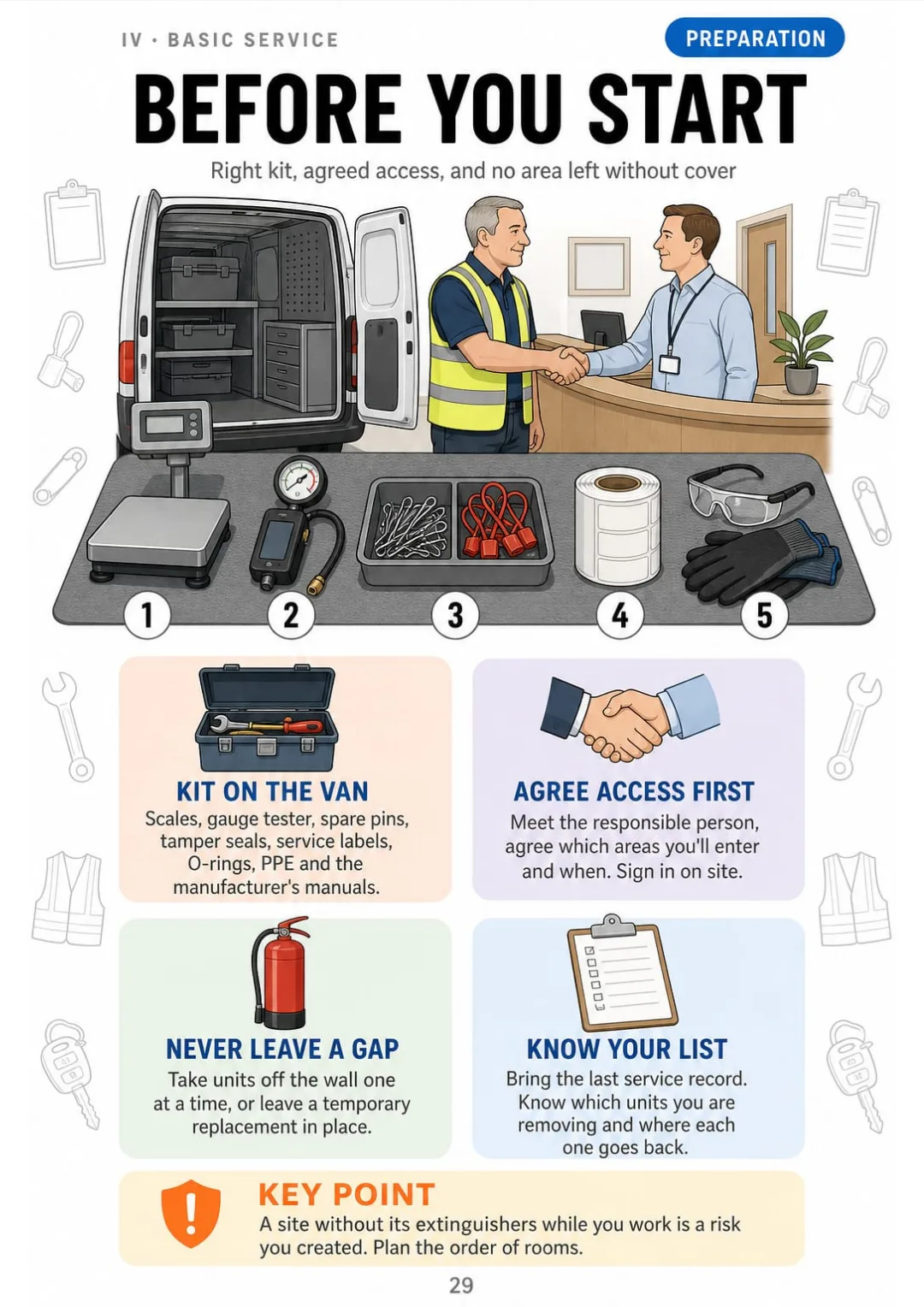
Scales, gauge tester, pins, seals, labels, PPE — and never leave an area without cover.
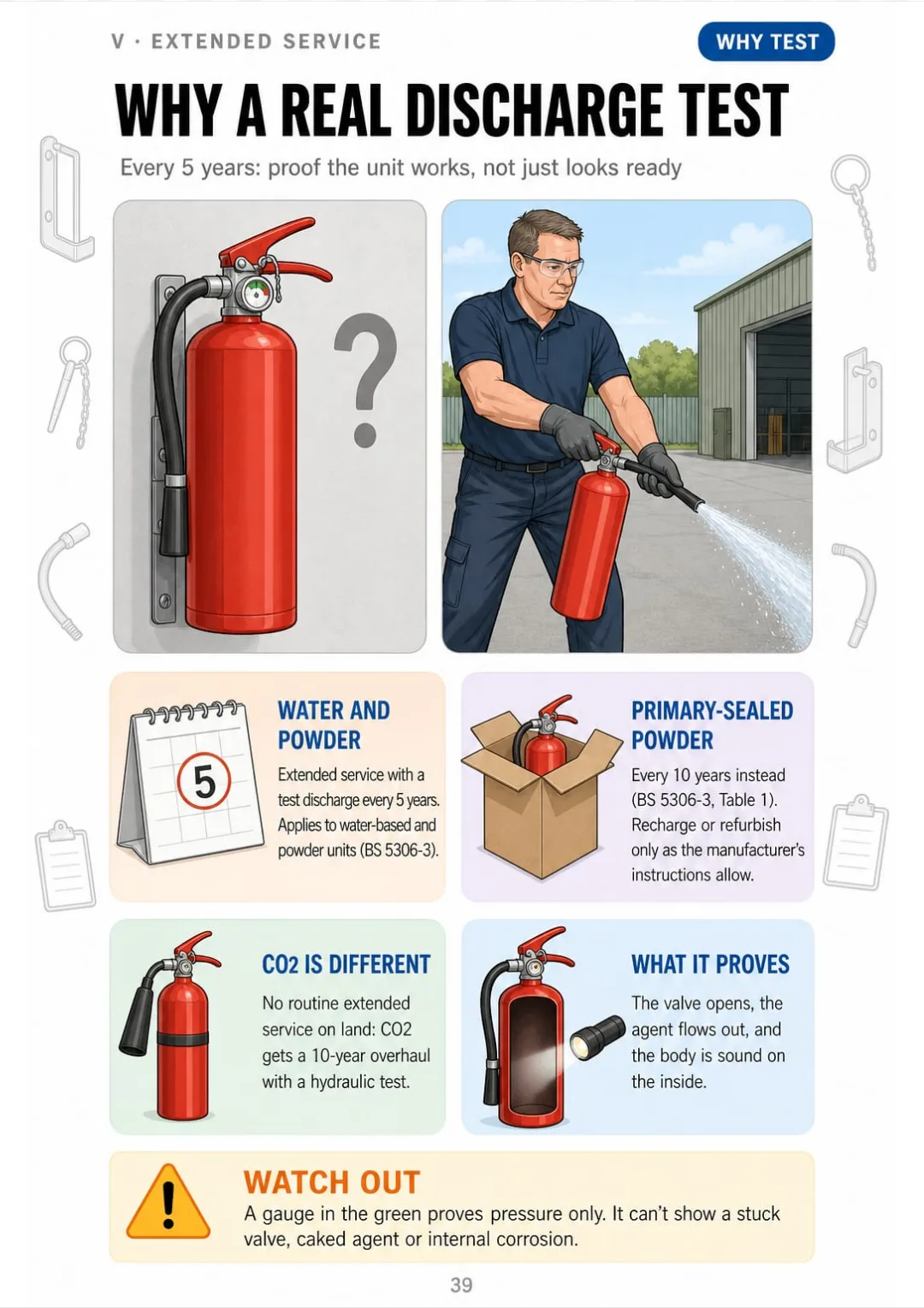
Extended service every 5 years for water and powder; 10 for primary-sealed powder (BS 5306-3).
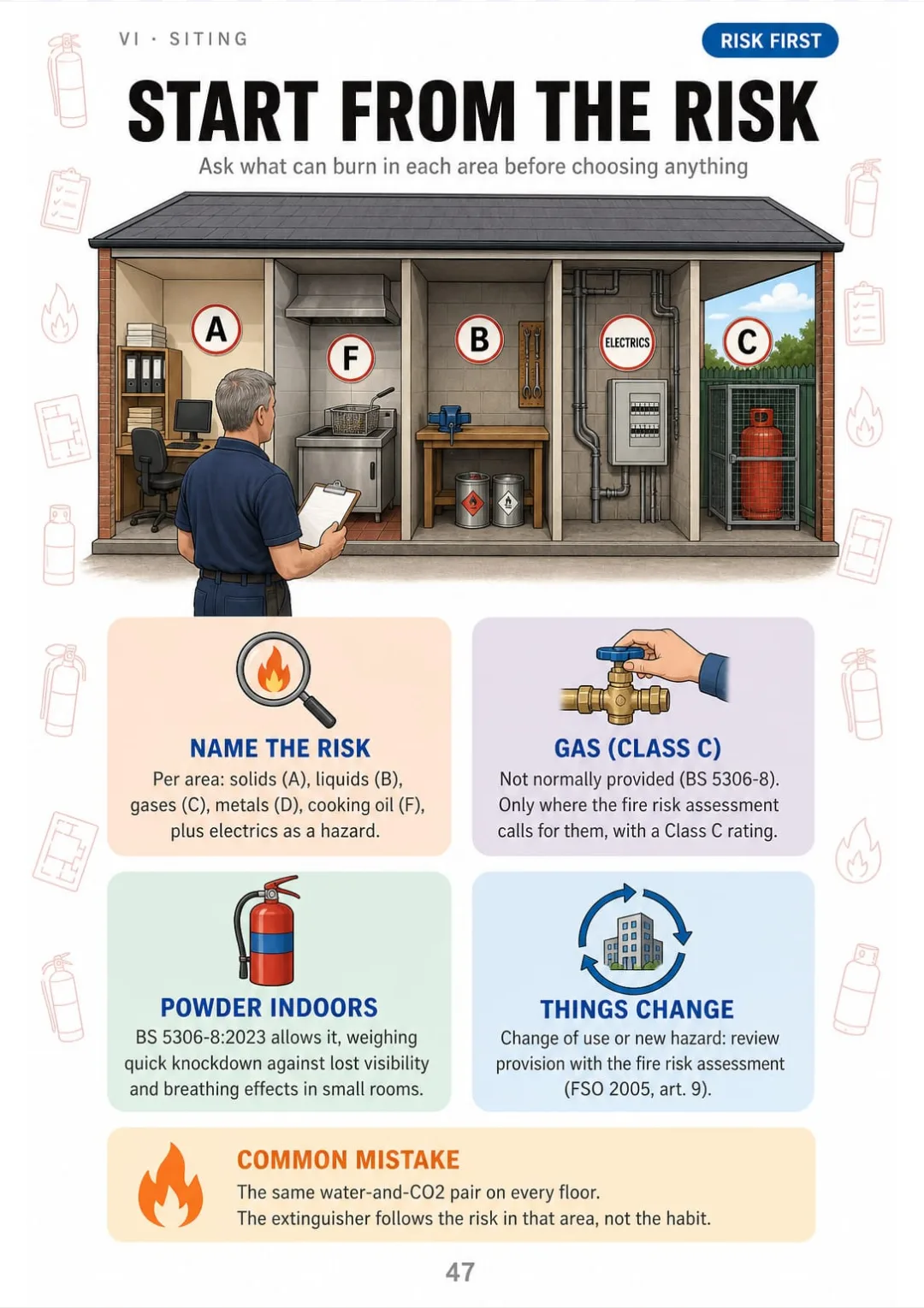
BS 5306-8: the extinguisher follows the risk in each area, room by room
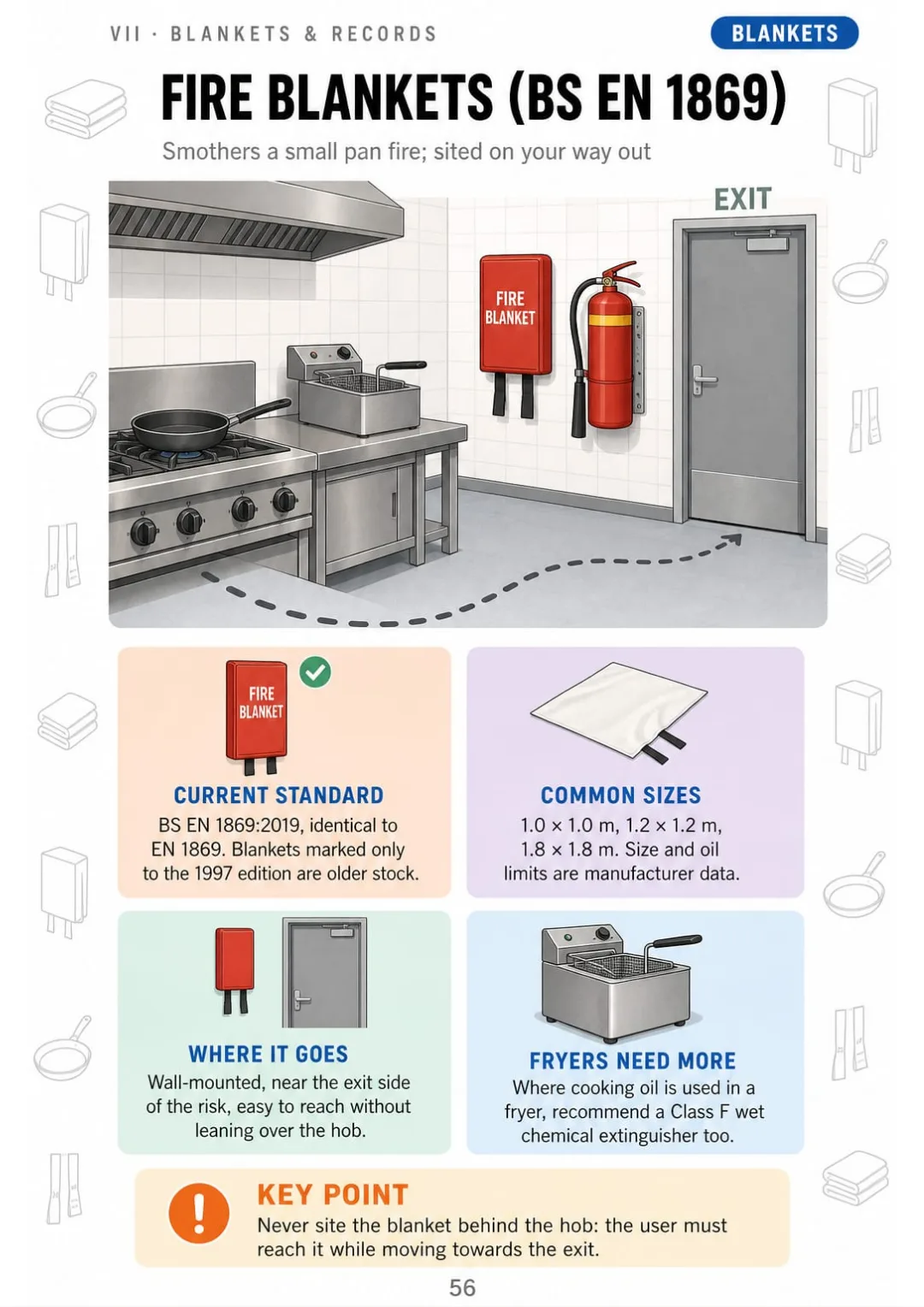
BS EN 1869:2019 blankets: wall-mounted on the exit side of the cooking risk.
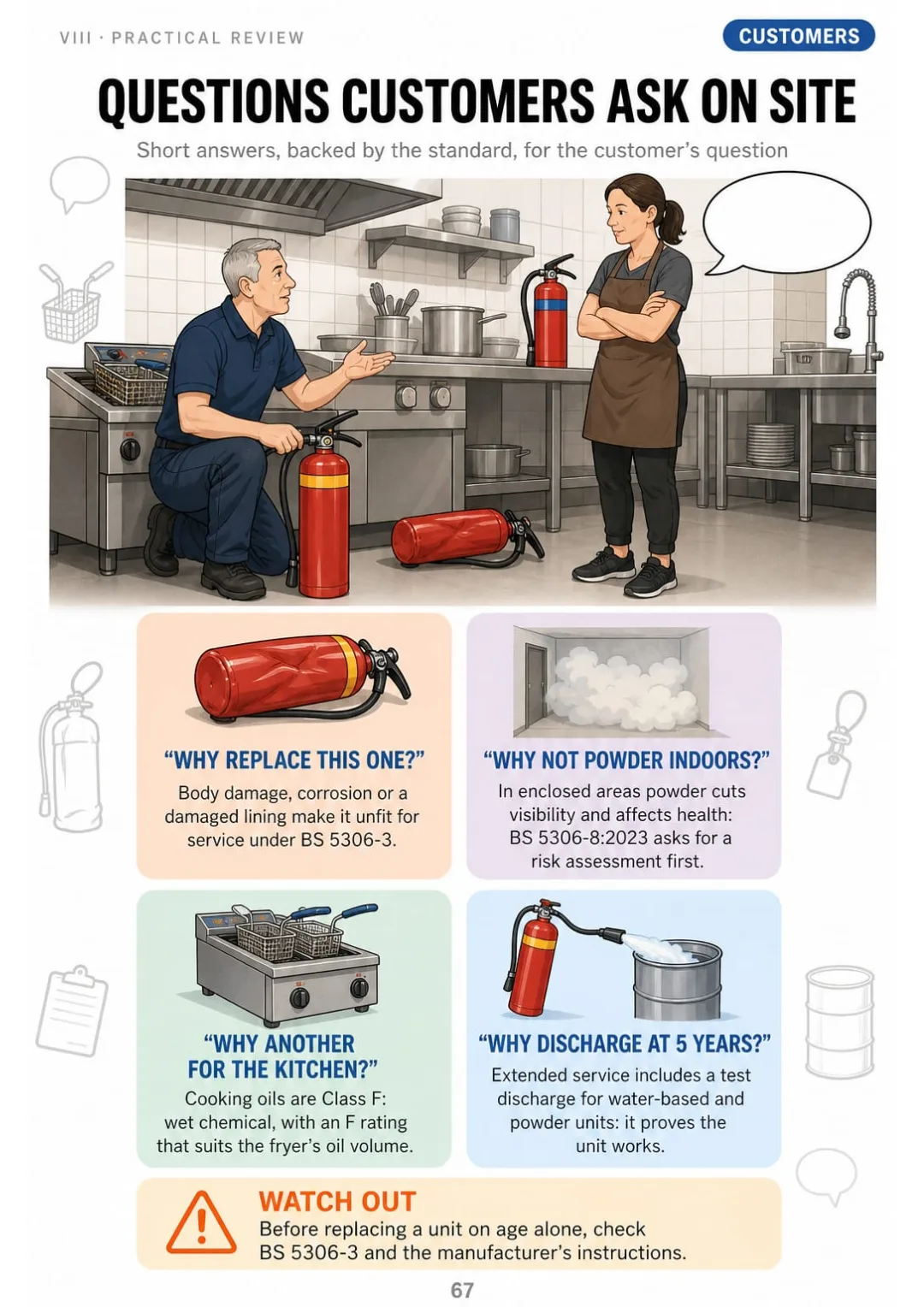
Clear answers on replacement, powder indoors, kitchens and 5-year discharge.

Swipe to see more →

These are real pages from the book. The table of contents is the full one: 8 parts and 64 topics.

The Problem Isn't You. It's How It Was Explained to You.

You're in the van between jobs, looking at a 9-litre water unit with last year's label on it, and you can't say for sure whether it's due a basic or an extended service.

You went through the intervals last night. But the code of practice sets them out in paragraphs, clause after clause, with the exceptions in between, and by morning basic, extended and overhaul have blurred into one.

Day 0, monthly, every 12 months, year 5, year 10: the BS 5306-3 calendar on one line

In this book the whole calendar is one page: day 0, monthly, every 12 months, year 5 and year 10 on a single line, with what each stage involves drawn underneath.

Every other topic gets the same treatment: the extinguisher in exploded view, stored pressure versus cartridge, the discharge test, siting from the risk, the fire blanket. Each one has its own page.

You look, you get it, and you do the job without going back to the standard.

COMPARE FOR YOURSELF

The Same Topic, Two Ways to Study It

THIS
  • The standard: line after line
  • Stored pressure and cartridge units explained in words only
  • You turn up to the assessment still unsure
Portable extinguishers are classified according to the means by which the expellant gas is retained. In stored pressure extinguishers, the expellant gas, typically nitrogen or dry air, is contained within the body together with the extinguishing medium, and the internal pressure is generally indicated by a pressure gauge. In cartridge operated extinguishers, the expellant gas is contained in a separate cartridge, which is punctured upon operation, thereby pressurising the body. It follows that the procedures applicable at basic service, including internal examination and cartridge weighing, differ materially between the two types.
FOR THIS
  • Both units in one cutaway drawing
  • The checks for each type in one box
  • You see it and you get it
Stored pressure vs cartridge operated: two cutaways, one difference that changes the whole service.
CONTENTS

Take a Look at the 8 Parts and 64 Topics

Fire and its classes, the extinguisher itself, the service calendar, basic service step by step, extended service and overhaul, siting, fire blankets and records, and a practical review: 68 pages, all illustrated.

IFire, Classes and Colours · pp. 5-11
  1. What a fire needs to keep burning
  2. The five classes of fire (BS EN 2)
  3. Electrical fires: a hazard, not a class
  4. Reading a fire rating: 13A, 55B, 75F
  5. Red body, colour band: BS 7863
  6. Which extinguisher for which fire
  7. The law behind every visit
IIKnow the Extinguisher · pp. 12-21
  1. Stored pressure or cartridge operated
  2. The extinguisher, exploded view
  3. Head, valve, safety pin and tamper seal
  4. Reading the pressure gauge
  5. Hoses, nozzles and CO2 horns
  6. Water and foam extinguishers
  7. Powder extinguishers
  8. CO2 extinguishers
  9. Wet chemical extinguishers
  10. Specialist extinguishers
IIIThe Service Calendar · pp. 22-28
  1. The whole timeline on one page
  2. Commissioning a new extinguisher
  3. The monthly check by the user
  4. Basic service: every 12 months
  5. Extended service: every 5 years
  6. Overhaul: every 10 years for CO2
  7. Service, replace or condemn?
IVBasic Service, Step by Step · pp. 29-38
  1. Before you start
  2. Step 1: identify and check the location
  3. Step 2: external inspection
  4. Step 3: pin, seal and lever
  5. Step 4: gauge and indicator test
  6. Step 5: weigh it
  7. Step 6: hose, nozzle and horn
  8. Step 7: instructions and markings
  9. Step 8: label and wall bracket
  10. Basic service on a cartridge operated unit
VExtended Service and Overhaul · pp. 39-46
  1. What a discharge test proves
  2. Where and how to discharge safely
  3. Discharge test: water and foam
  4. Discharge test: powder
  5. Discharge test: wet chemical
  6. Refill and recharge
  7. CO2 overhaul at 10 years
  8. Condemning and disposal
VISiting and Provision (BS 5306-8) · pp. 47-55
  1. Start from the risk
  2. Class A cover and the 30 m rule
  3. Class B risks
  4. Electrical risks
  5. Kitchens and Class F
  6. Fire points and exit routes
  7. Mounting height
  8. Signs and identification
  9. Outdoors, cabinets and harsh environments
VIIFire Blankets, Labels and Records · pp. 56-61
  1. Fire blankets (BS EN 1869)
  2. Checking a fire blanket
  3. The service label
  4. The service record
  5. Reporting faults and recommendations
  6. Competence and BAFE SP101
VIIIPractical Review · pp. 62-68
  1. The service calendar on one page
  2. Basic service checklist
  3. Extended service and overhaul checklist
  4. Siting checklist
  5. The most frequent mistakes, side by side
  6. Questions customers ask on site
  7. Assessment day: the last read

One Page, One Topic, All Clear

Think of it this way:

It's Monday morning in a school kitchen. The CO2 by the door is ten years old and the site manager wants to know what happens to it now.

You open the book at the CO2 overhaul page and the unit is drawn with each stage of the overhaul set out in order, next to the service timeline.

Extended service every 5 years for water and powder; 10 for primary-sealed powder (BS 5306-3).

Same with the powder discharge test, the 30 m rule for Class A, wet chemical by the fryer, the service label and the fire blanket: each one on its own page.

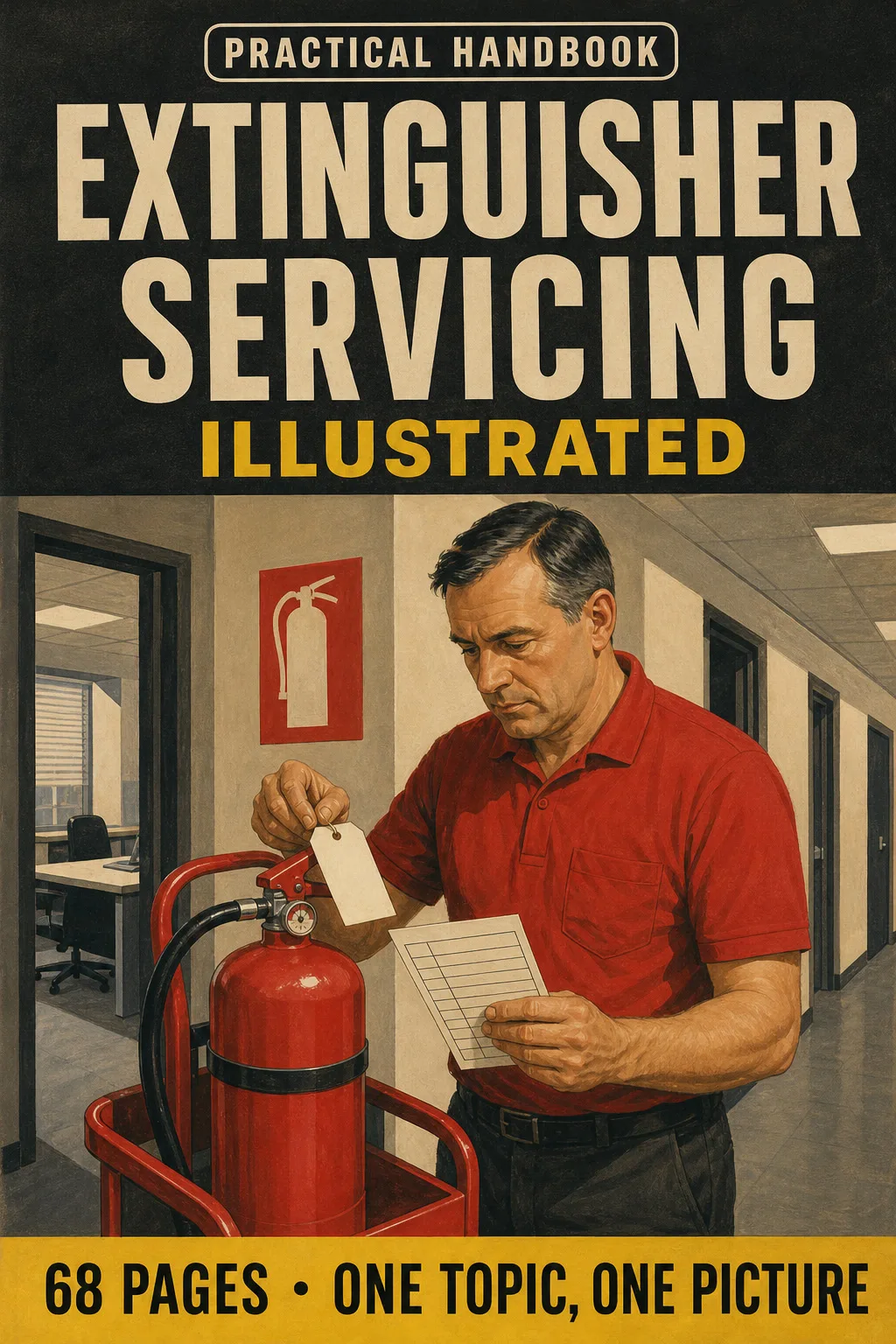
Extinguisher Servicing Illustrated is 68 illustrated pages in 8 parts, one topic per page, and it ends with checklists for every service, the most frequent mistakes side by side and a last read for assessment day.
What you see drawn, you don't have to memorize.

What's Inside Extinguisher Servicing Illustrated:

Ipp. 5-11

Fire, Classes and Colours

What a fire needs to keep burning, the five classes of fire, why electrical is a hazard and not a class, fire ratings like 13A and 55B, colour bands and the law behind every visit.

IIpp. 12-21

Know the Extinguisher

Stored pressure or cartridge, the exploded view, head, pin and seal, the gauge, hoses and horns, and each type: water, foam, powder, CO2, wet chemical and specialist.

IIIpp. 22-28

The Service Calendar

Know at a glance what a unit is due: commissioning, the monthly user check, basic service, extended service and CO2 overhaul on one drawn timeline, plus when to service, replace or condemn.

IVpp. 29-38

Basic Service, Step by Step

Do every basic service in the same order: what to check before you start, then eight steps drawn one after another (location, external inspection, pin and seal, gauge, weighing, hose and horn, markings, label and bracket), plus what changes on cartridge units.

Vpp. 39-46

Extended Service and Overhaul

What a discharge test proves, where to discharge safely, the tests for water, foam, powder and wet chemical, refill and recharge, CO2 overhaul and disposal.

VIpp. 47-55

Siting and Provision (BS 5306-8)

Starting from the risk, Class A cover and the 30 m rule, Class B, electrical risks, kitchens and Class F, fire points, mounting height, signs and harsh environments.

VIIpp. 56-61

Fire Blankets, Labels and Records

Fire blankets and how to check them, the service label, the service record, reporting faults and recommendations, and competence under BAFE SP101.

VIIIpp. 62-68

Practical Review

The calendar on one page, checklists for basic service, extended service and siting, the most frequent mistakes side by side, questions customers ask and a last read for assessment day.

At the end of the book: Checklists for every service, the most frequent mistakes side by side and a last read for assessment day.
Plus: 2 Free Books

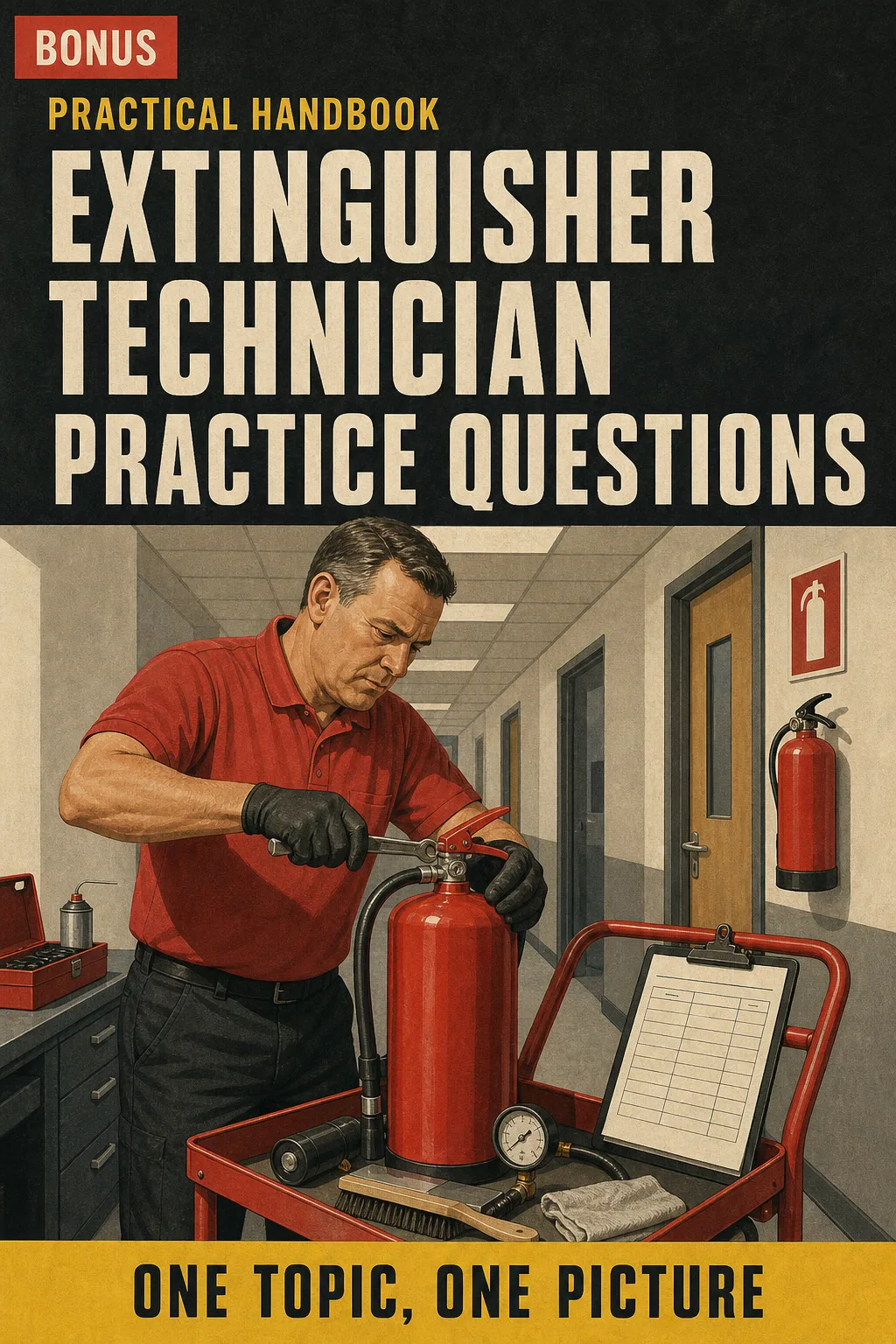
Extinguisher Technician Practice Questions

BONUS 1: «Extinguisher Technician Practice Questions»

Value on its own: US$ 17.90

Practise with assessment-style questions and check every answer against the page that explains it, so you know what you've got and what to go back to.

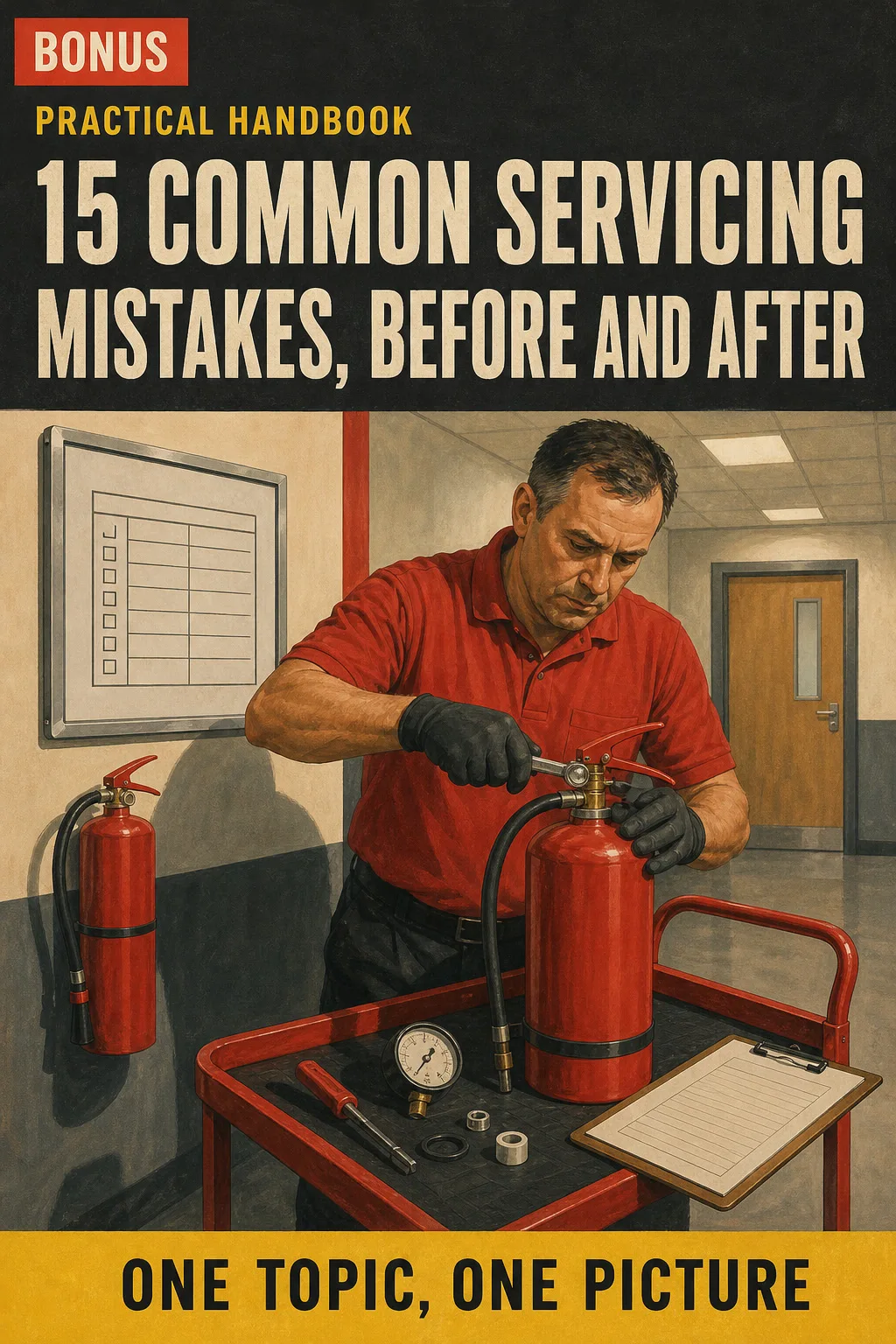
15 Common Servicing Mistakes, Before and After

BONUS 2: «15 Common Servicing Mistakes, Before and After»

Value on its own: US$ 14.90

See the most frequent servicing and siting mistakes drawn next to the correct version, so you spot them on site before a customer or assessor does.

Extinguisher Servicing Illustrated with 2 Free Books

  • Extinguisher Servicing Illustrated: 68 illustrated pagesUS$ 63
  • BONUS 1: Extinguisher Technician Practice QuestionsUS$ 17.90
  • BONUS 2: 15 Common Servicing Mistakes, Before and AfterUS$ 14.90
  • High-resolution PDF to printIncluded
Total value US$ 95.80
YOUR PRICE:
US$ 27
You save US$ 68.80
YES, I WANT EXTINGUISHER SERVICING ILLUSTRATED FOR US$ 27

📄 This is a digital PDF book sent to your email: nothing is printed or shipped.

Secure purchaseEncrypted payment30-day guarantee

PDF by email: We email you Extinguisher Servicing Illustrated as a PDF, together with the two free books. It's a single payment: no installments, no extra charges.

Who This Book Is For

You're new to extinguishers

You're new to extinguishers

You know tools and sites, but not this standard yet. Each topic is drawn in the order you'll meet it in the van, from fire classes to the service label.

Your assessment is coming up

Your assessment is coming up

The intervals, the eight steps of a basic service and the siting rules on separate pages, so you can go over them the night before without hunting through clauses.

You've been servicing for years

You've been servicing for years

A book to keep in the van: when a customer asks why a unit can't go there, or whether it's due a discharge test, you open the page and show them.

Everything You Get Today

US$ 95.80US$ 27
YES, I WANT EXTINGUISHER SERVICING ILLUSTRATED FOR US$ 27

📄 This is a digital PDF book sent to your email: nothing is printed or shipped.

30DAYS
GUARANTEE

30-Day Guarantee

Try Extinguisher Servicing Illustrated for 30 days, bonus books included.

We refund everything if the file won't open, if the book isn't what you see here, if you were charged twice or if the email doesn't arrive. Just email us.

You pay once. No subscriptions.

Frequently Asked Questions

Is it for me if I'm moving into extinguisher servicing from another trade?

Yes. It starts from what a fire needs to burn and builds up to the service and siting rules. It doesn't treat you as a beginner with tools: it shows you the standard in the order you work.

Where does the content come from?

From the current editions of BS 5306-3 and BS 5306-8, cross-checked with BS EN 2, BS EN 3, BS 7863, BS EN 1869, BS ISO 7010 and the Regulatory Reform (Fire Safety) Order 2005. It's written for the UK, not from American NFPA rules.

Is it official? Do I get a certificate?

No. It's an illustrated study book, not a qualification. It doesn't give you a certificate and it isn't a competence assessment: that comes from your employer or training provider. It isn't published or endorsed by BSI, BAFE or any certification body, and it doesn't replace the standards themselves.

Does it replace my training course?

No. It goes alongside your employer's training or your course provider and your supervised work on site, so you can go over everything in the same order.

Are the practice questions the ones in the assessment?

No. They're written for this book in the style of an assessment, and each answer points to the page that explains it.

When and how does it arrive?

As a PDF by email, to the address you enter at checkout. The 2 bonus books arrive the same way.

Do I have to pay every month?

No. It's a one-off payment. No subscription.

Can I have it on paper?

Yes. The PDF is ready to print, so you can keep a copy in the van.

How does the refund work?

You have 30 days. We refund everything if the file won't open, if the book isn't what you see on this page, if you were charged twice or if the email doesn't arrive: just email us.

Before You Close This Page

No more rereading the standard with none of it sticking.

The service calendar is drawn: you look and you know.

You get to the assessment knowing where everything is.

Drawings make studying faster.

The book is right below.

One-time payment: US$ 27 · Guarantee: 30 days · PDF by email

YES, I WANT EXTINGUISHER SERVICING ILLUSTRATED FOR US$ 27

📄 This is a digital PDF book sent to your email: nothing is printed or shipped.